Delhi HC Upholds CESTAT Remand in Rs. 3.75 Crore Service Tax Dispute Over Embassy Exemption Claims
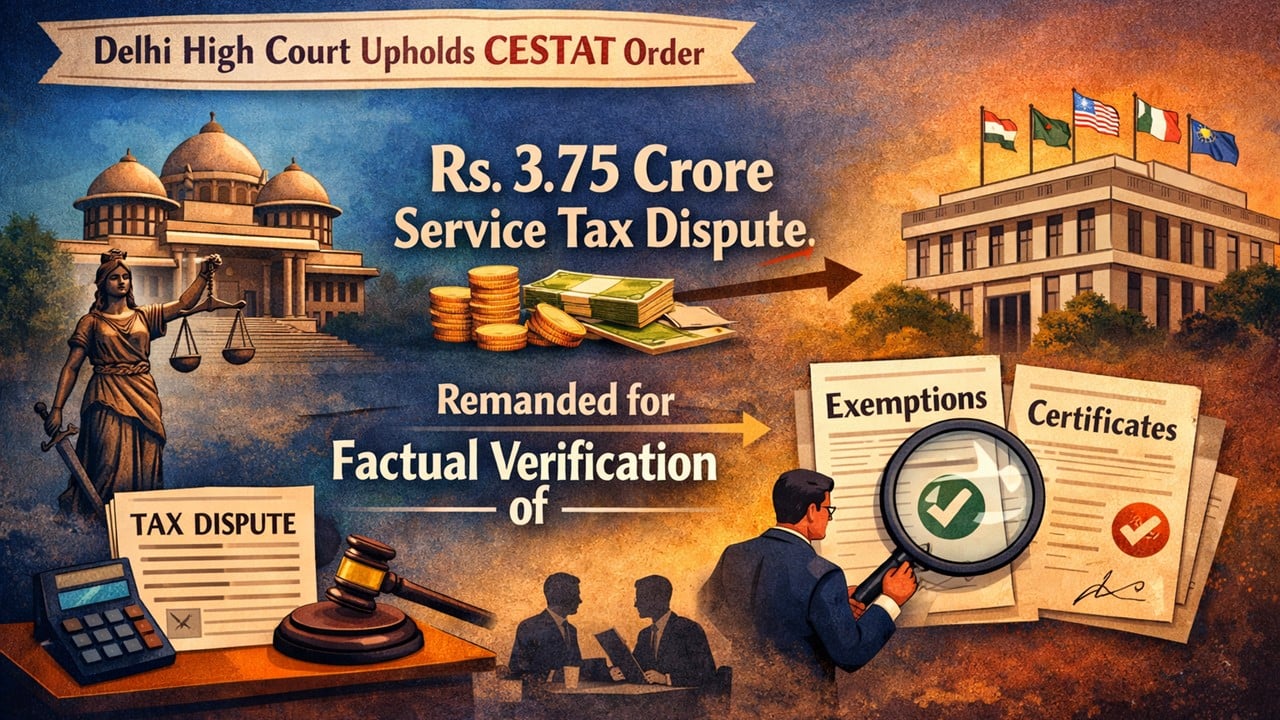
Delhi HC Upholds CESTAT Remand in Rs. 3.75 Crore Service Tax Dispute Over Embassy Exemption Claims
The Delhi High Court has delivered its judgement on a writ petition filed by the Principal Commissioner of CGST against a company, Pro-Interactive Services India Private Limited, challenging an order dated September 04, 2025, passed by the Customs, Excise and Service Tax Appellate Tribunal (CESTAT). The case concerns a service tax dispute over exemption claims for services provided to foreign embassies.
The assessee company is engaged in providing security, manpower supply, and construction services. During the investigation, the tax department raised an allegation against the assessee that it incorrectly claimed exemption from service tax on services provided to foreign diplomatic missions without being eligible for the conditions mentioned under Notification No. 27/2012-ST dated June 20, 2012. In conclusion, the DGGI issued a show cause notice (SCN) dated September 04, 2019, addressed to the assessee, proposing a tax demand amounting to Rs. 3.75 crore in service tax along with interest and penalties.
The aggrieved assessee, with the aforementioned directions, filed an appeal before the Customs, Excise and Service Tax Appellate Tribunal (CESTAT). The CESTAT, after analysing the case, remands the matter back to the adjudicating authority for fresh consideration. The tribunal had noted that most certificates required under the notification had been obtained by the assessee, though some were furnished later. Now, the tribunal has asked the adjudicating authority to deeply examine these certificates before granting exemption and also set aside penalties while allowing the cum-duty benefit where applicable.
The tax department, being dissatisfied with the CESTAT’s ruling, filed an appeal before the Delhi High Court, arguing that exemption notifications must be strictly interpreted and all conditions must be fully adhered to. The High Court ruled that while exemption notifications should be strictly interpreted, verification of factual information was still necessary. Since the Tribunal only ordered verification and did not grant automatic exemption, no substantial question of law arose. Accordingly, the court dismissed the assessee’s appeal.